
Wednesday, 10 December 2008

Tuesday, 9 December 2008
Focus Group Plan
People in my focus group:
Me
The team
My Mam and my Dad
Amy
Neil
Things to talk about in my focus group:
Violence and stuff
Key films
History of Violence
Things to bring to focus group:
Notepad
Pen
Team
Other people
Juice
Bowl of sweeties
Bowl of nachos.
Next Week: Evenings for a birra focus and stuff.
To do: Ask team about free evenings.
Me
The team
My Mam and my Dad
Amy
Neil
Things to talk about in my focus group:
Violence and stuff
Key films
History of Violence
Things to bring to focus group:
Notepad
Pen
Team
Other people
Juice
Bowl of sweeties
Bowl of nachos.
Next Week: Evenings for a birra focus and stuff.
To do: Ask team about free evenings.
Wednesday, 3 December 2008
Exam Question
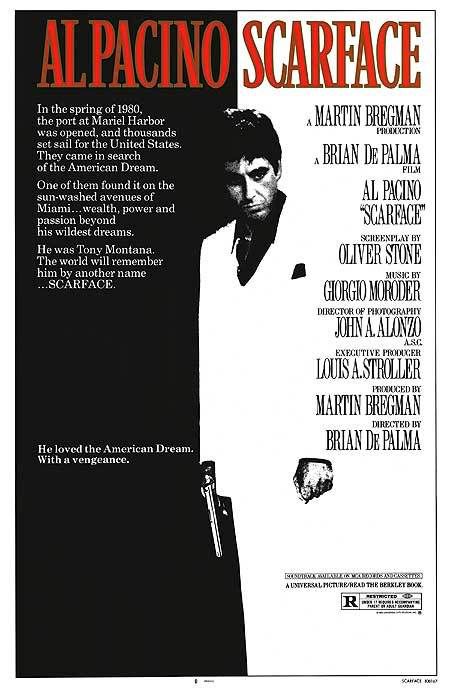
To what extent is there evidence that youths in western culture have become desensitized to violence due to its mainstream portrayal in modern films. Analysis will include crime thriller films such as Quentin Tarantino's "Reservoir Dogs", David Fincher's "Seven" and Brian de Palmer's "Scarface".
The purpose of this piece is to discover if there is evidence of desensitization as time progresses, i.e. there is around a nine year gap between each of my key films in the study to incorporate into the hypothesis.
Desensitization is a media theory in itself, defined by Galit Ferguson quite simply in MediaMagazine as when "we are exposed to too much violence we will become less sensitive to real life violence." It goes on to raise concerns about the sheer amount of violence that is shown on our screens today, but also mentions the difficulty in proving this theory due to other influences on behaviour from the life that audience members may already lead.
Hall et al. (1978) suggest that violence is often regarded as intrinsically entertaining to an audience who, it is argued, have become more emotionally detached and desensitized to the vast array of visual images bombarding them from every corner of the world, this theory is very similar to mine, only it sounds better and cooler and stuff. This is in turn backed up by Jerry Mander, who states, ""Press conferences got coverage once. Rallies brought more attention that press conferences. Marches more than rallies. Sit-ins more than marches. Violence more than sit-ins. A theory evolved: accelerate the drama of each successive action to maintain the level of coverage." Quite intelligent, don't you think?
For this study I conducted some primary research in the form of a questionnaire, which urged any participants to consider their own possible desensitization, as I for one do believe that I have become desensitized, although only to a certain degree. I believe my desensitization is more central to people's use of bad language, though it still counts for violence. In reality, I've not yet conducted this questionnaire, but it's on my to-do list. The questions in the quiz first asked if they could recall any specific times they'd been effected or disturbed by a violent sequence in a film, then again at the end, to see if their minds had been changed on reconsideration. A further question could be to consider what, including violence, they consider to be the most psychologically affecting factor in films.
The purpose of this piece is to discover if there is evidence of desensitization as time progresses, i.e. there is around a nine year gap between each of my key films in the study to incorporate into the hypothesis.
Desensitization is a media theory in itself, defined by Galit Ferguson quite simply in MediaMagazine as when "we are exposed to too much violence we will become less sensitive to real life violence." It goes on to raise concerns about the sheer amount of violence that is shown on our screens today, but also mentions the difficulty in proving this theory due to other influences on behaviour from the life that audience members may already lead.
Hall et al. (1978) suggest that violence is often regarded as intrinsically entertaining to an audience who, it is argued, have become more emotionally detached and desensitized to the vast array of visual images bombarding them from every corner of the world, this theory is very similar to mine, only it sounds better and cooler and stuff. This is in turn backed up by Jerry Mander, who states, ""Press conferences got coverage once. Rallies brought more attention that press conferences. Marches more than rallies. Sit-ins more than marches. Violence more than sit-ins. A theory evolved: accelerate the drama of each successive action to maintain the level of coverage." Quite intelligent, don't you think?
For this study I conducted some primary research in the form of a questionnaire, which urged any participants to consider their own possible desensitization, as I for one do believe that I have become desensitized, although only to a certain degree. I believe my desensitization is more central to people's use of bad language, though it still counts for violence. In reality, I've not yet conducted this questionnaire, but it's on my to-do list. The questions in the quiz first asked if they could recall any specific times they'd been effected or disturbed by a violent sequence in a film, then again at the end, to see if their minds had been changed on reconsideration. A further question could be to consider what, including violence, they consider to be the most psychologically affecting factor in films.
Monday, 1 December 2008
Media Effects Lecture.
Method of Research: Secondary.
Type of Source: Academic
Title and Author of Source: Media Audiences: Media Effects by Christa Van Raalte
Location of Source: Teesside University
Main Points Raised:
BBFC = British Board of Film Classification
Debate over censorship and things: Theme, Language, Violence, Drug Abuse, Sex/Nudity, Horror, Imitable techniques.
Jamie Bulger Case, related to Child's Play 3. No proof they'd ever seen it
Type of Source: Academic
Title and Author of Source: Media Audiences: Media Effects by Christa Van Raalte
Location of Source: Teesside University
Main Points Raised:
BBFC = British Board of Film Classification
Debate over censorship and things: Theme, Language, Violence, Drug Abuse, Sex/Nudity, Horror, Imitable techniques.
Jamie Bulger Case, related to Child's Play 3. No proof they'd ever seen it
Monday, 24 November 2008
Overview
Hypothesis: To what extent is there evidence that youths in western culture have become desensitized to violence due to its mainstream portrayal in modern films. Analysis will include crime thriller films such as Quentin Tarantino's "Reservoir Dogs", David Fincher's "Seven" and Brian de Palmer's "Scarface".
Internet
Textual Analysis
Theories
Hypodermic Syringe Theory
Cultivation Theory
Desensitization
Books
Journals/Mags/Papers
Primary Research
Internet
Textual Analysis
Theories
Hypodermic Syringe Theory
Cultivation Theory
Desensitization
Books
Journals/Mags/Papers
Primary Research
Wednesday, 19 November 2008
Research Summary: Number Three
Method of Research: Secondary
Type of Source: Academic/Criticism
Title and Author of Source: MediaMagazine. Galit Ferguson.
Location of Source: The English and Media Centre, 18 Compton Terrace, London, N1 2UN
Main Points Raised:
Hypodermic Syringe Theory.
What does the theory suggest? Just like the syringe used to inject a drug into a body, the media 'injects' messages directly into the minds of the viewers etc and they can be as addictive as heroin...
Strengths of this approach? This approach draws attention to the power that media producers have, and to the importance of the forms of media to which audiences have access.
Weaknesses of this approach? The 'injected' audience is seen as passive and powerless. This model is mostly used when the effects of media on women or children are the subject of research. The way people use media remains unaccounted for.
Cultivation Theory.
What does the theory suggest? As audiences watch more and more film and television, they gradually develop certain views about the world, some of which are 'false'.
Strengths of this approach? This approach draws attention to the fact that audiences gain a lot of their knowledge about the world from the media. It also recognises the important role the media have in our lives.
Weaknesses of this approach? This approach can encourage views such as 'Crimewatch feeds perceptions that Britain's crime rate is growing' while not actually measuring this idea against the actual views of audience members. In other words, it's hard to prove accurately.
Desensitisation.
What does the theory suggest? If we are exposed to too much violence, or too much blatant sexuality, we will become less sensitive to real life violence and sexual behaviour.
Strengths of this approach? This theory draws attention to the volume of violence and representations of sex in the media. It raises questions about the amounts of these representations we should be witnessing.
Weaknesses of this approach? How can this theory be proved? It is difficult to separate the effects of the media from the effects of housing, class position, mood, educations, wealth/poverty, gender, sexuality, cultural background, ethnicity, and so on.
Copycat theory.
What does the theory suggest? This approach suggests that people will imitate what they see in the media - e.g. if young people watch Natural Born Killers, they will go out on a killing spree. This is not so much a 'theory' as an assumption perpetuated by the Press!
Strengths of this approach? The power of this approach is that it feeds off (and mirrors) the types of concerns that parents have about their kids' media use. It might encourage parents to stop their children from playing violent computer games, for example.
Weaknesses of this approach? Firstly: different people see different levels of 'risk' in different media! So one person's threat is another person's light evening entertainment ... Secondly: while short term effects might be measurable, it is hard to measure long term effects of this kind. This is often the basis for moral panics - e.g. rap music leads to gun violence.
Strengths: Concise. Simple to understand.
Weaknesses: Perhaps has not gone into enough detail on each theory.
Dig it bitch.
Type of Source: Academic/Criticism
Title and Author of Source: MediaMagazine. Galit Ferguson.
Location of Source: The English and Media Centre, 18 Compton Terrace, London, N1 2UN
Main Points Raised:
Hypodermic Syringe Theory.
What does the theory suggest? Just like the syringe used to inject a drug into a body, the media 'injects' messages directly into the minds of the viewers etc and they can be as addictive as heroin...
Strengths of this approach? This approach draws attention to the power that media producers have, and to the importance of the forms of media to which audiences have access.
Weaknesses of this approach? The 'injected' audience is seen as passive and powerless. This model is mostly used when the effects of media on women or children are the subject of research. The way people use media remains unaccounted for.
Cultivation Theory.
What does the theory suggest? As audiences watch more and more film and television, they gradually develop certain views about the world, some of which are 'false'.
Strengths of this approach? This approach draws attention to the fact that audiences gain a lot of their knowledge about the world from the media. It also recognises the important role the media have in our lives.
Weaknesses of this approach? This approach can encourage views such as 'Crimewatch feeds perceptions that Britain's crime rate is growing' while not actually measuring this idea against the actual views of audience members. In other words, it's hard to prove accurately.
Desensitisation.
What does the theory suggest? If we are exposed to too much violence, or too much blatant sexuality, we will become less sensitive to real life violence and sexual behaviour.
Strengths of this approach? This theory draws attention to the volume of violence and representations of sex in the media. It raises questions about the amounts of these representations we should be witnessing.
Weaknesses of this approach? How can this theory be proved? It is difficult to separate the effects of the media from the effects of housing, class position, mood, educations, wealth/poverty, gender, sexuality, cultural background, ethnicity, and so on.
Copycat theory.
What does the theory suggest? This approach suggests that people will imitate what they see in the media - e.g. if young people watch Natural Born Killers, they will go out on a killing spree. This is not so much a 'theory' as an assumption perpetuated by the Press!
Strengths of this approach? The power of this approach is that it feeds off (and mirrors) the types of concerns that parents have about their kids' media use. It might encourage parents to stop their children from playing violent computer games, for example.
Weaknesses of this approach? Firstly: different people see different levels of 'risk' in different media! So one person's threat is another person's light evening entertainment ... Secondly: while short term effects might be measurable, it is hard to measure long term effects of this kind. This is often the basis for moral panics - e.g. rap music leads to gun violence.
Strengths: Concise. Simple to understand.
Weaknesses: Perhaps has not gone into enough detail on each theory.
Dig it bitch.
Wednesday, 12 November 2008
Research Summary: Number One
Method of research: Secondary.
Type of source: Book.
Title and Author of source (Include author's credentials whenever possible): Media and Crime. Yvonne Jewkes.
Location of source (Website, book publication details; magazine, date and issue etc.): Sage Publications Ltd., 1 Oliver's Yard, 55 City Road, London, EC1Y 1SP, printed in 2006.
Main points raised (bullets will suffice). Include relevant quotes and continue on back of sheet if necessary:
The second difficulty with postmodernism lies in how we define "entertainment". As Hall et al. (1978) suggests, violence - including violent crime - is often regarded as intrinsically entertaining to an audience who, it is argued, have become more emotionally detached and desensitized to the vast array of visual images bombarding them from every corner of the world. Many see this as an escalating problem. Jerry Mander sums it up thus:
"Press conferences got coverage once. Rallies brought more attention that press conferences. Marches more than rallies. Sit-ins more than marches. Violence more than sit-ins. A theory evolved: accelerate the drama of each successive action to maintain the level of coverage. (1980:32)"
Strengths: Accurate, approved for printing.
Weaknesses: Only one persons' input.
Evaluation: Research from Yvonne Jewkes book is good as it has two strengths and one weakness. I will incorporate it into my overall thing.
Links to other sources/relevant points: Jerry Mander? (Look in to it, Tom) Hall (1978).
Type of source: Book.
Title and Author of source (Include author's credentials whenever possible): Media and Crime. Yvonne Jewkes.
Location of source (Website, book publication details; magazine, date and issue etc.): Sage Publications Ltd., 1 Oliver's Yard, 55 City Road, London, EC1Y 1SP, printed in 2006.
Main points raised (bullets will suffice). Include relevant quotes and continue on back of sheet if necessary:
The second difficulty with postmodernism lies in how we define "entertainment". As Hall et al. (1978) suggests, violence - including violent crime - is often regarded as intrinsically entertaining to an audience who, it is argued, have become more emotionally detached and desensitized to the vast array of visual images bombarding them from every corner of the world. Many see this as an escalating problem. Jerry Mander sums it up thus:
"Press conferences got coverage once. Rallies brought more attention that press conferences. Marches more than rallies. Sit-ins more than marches. Violence more than sit-ins. A theory evolved: accelerate the drama of each successive action to maintain the level of coverage. (1980:32)"
Strengths: Accurate, approved for printing.
Weaknesses: Only one persons' input.
Evaluation: Research from Yvonne Jewkes book is good as it has two strengths and one weakness. I will incorporate it into my overall thing.
Links to other sources/relevant points: Jerry Mander? (Look in to it, Tom) Hall (1978).
Tuesday, 11 November 2008
Tom's First Real Hypothesis Draft.
To what extent is there evidence that youths in western culture have become desensitized to violence due to its mainstream portrayal in modern films. Analysis will include crime thriller films such as Quentin Tarantino's "Reservoir Dogs", David Fincher's "Seven" and Brian de Palmer's "Scarface".


Thursday, 6 November 2008
Summary of Media Theories
http://www.cw.utwente.nl/theorieenoverzicht/Theory%20clusters/Mass%20Media/Hypodermic_Needle_Theory.doc/
http://www.northallertoncoll.org.uk/media/audience.htm
http://www.allisonmedia.net/downloads/Year_12/Audience_booklet.pdf
http://en.wikipedia.org/wiki/Hypodermic_needle_model
http://en.wikipedia.org/wiki/Cultivation_theory
Magic Bullet Theory
The magic bullet theory-- or hypodermic needle theory--was much more common among media researchers in the early 20th century than it is now. This theory posits that media messages impact people in direct, measurable, and immediate ways-- as if a bullet hit the body, or as if the body was injected with a substance from a needle. Most researchers argue that these kinds of effects are rare, or involve events of little consequence. For example, when someone watches a pizza commercial and then orders the pizza seen on the TV, this is more or less a magic bullet effect. However, it's much less likely that someone will see a school shooting on TV and then immediately attack a school.
Desensitization
This theory posits that because people are exposed to so much violence in the media, violence no longer makes a strong emotional impact upon them. Most people would agree that by watching lots of violent movies, a viewer no longer gets upset while watching violent movies. However, the debate surrounding this concept is whether people will also be desensitized to real life violence. If a person leaves the movie theater after seeing a violent film, and then sees a real dead body on the street, will this person still experience desensitization?
Cultivation Theory
Cultivation theory focuses more on how people's attitudes are impacted by the media, rather than just behaviors. Although attitudes and behaviors are intricately related, cultivation theorists focus on how people think more than what people do. Much of this research involves comparing the attitudes of heavy media users, moderate media users, and light media users.
One finding of this research is that when people are exposed to heavy media violence, they seem to have an attitudinal misconception called mean world syndrome. This means that they overestimate how much violence actually occurs in their communities and the rest of the world. People who are exposed to less media violence have a more realistic sense of the amount of violence in the real world.
http://www.northallertoncoll.org.uk/media/audience.htm
http://www.allisonmedia.net/downloads/Year_12/Audience_booklet.pdf
http://en.wikipedia.org/wiki/Hypodermic_needle_model
http://en.wikipedia.org/wiki/Cultivation_theory
Magic Bullet Theory
The magic bullet theory-- or hypodermic needle theory--was much more common among media researchers in the early 20th century than it is now. This theory posits that media messages impact people in direct, measurable, and immediate ways-- as if a bullet hit the body, or as if the body was injected with a substance from a needle. Most researchers argue that these kinds of effects are rare, or involve events of little consequence. For example, when someone watches a pizza commercial and then orders the pizza seen on the TV, this is more or less a magic bullet effect. However, it's much less likely that someone will see a school shooting on TV and then immediately attack a school.
Desensitization
This theory posits that because people are exposed to so much violence in the media, violence no longer makes a strong emotional impact upon them. Most people would agree that by watching lots of violent movies, a viewer no longer gets upset while watching violent movies. However, the debate surrounding this concept is whether people will also be desensitized to real life violence. If a person leaves the movie theater after seeing a violent film, and then sees a real dead body on the street, will this person still experience desensitization?
Cultivation Theory
Cultivation theory focuses more on how people's attitudes are impacted by the media, rather than just behaviors. Although attitudes and behaviors are intricately related, cultivation theorists focus on how people think more than what people do. Much of this research involves comparing the attitudes of heavy media users, moderate media users, and light media users.
One finding of this research is that when people are exposed to heavy media violence, they seem to have an attitudinal misconception called mean world syndrome. This means that they overestimate how much violence actually occurs in their communities and the rest of the world. People who are exposed to less media violence have a more realistic sense of the amount of violence in the real world.
Tuesday, 4 November 2008
Brief Summary of Theories
Hypodermic syringe theory - media like a syringe that injects attitudes, ideas and beliefs. Media influence. "Brainwashing"
Two step flow - people discussing opinions of media and more likely to be affected.
Culmination theory - Desensitization.
Uses and gratifications - different uses for media, make our own choices. expecting to gain something from the media we choose to consume.
Reception analysis - audiences themselves help create meaning for the text, influenced by moods and upbringing etc.
David morley nationwide study
david gauntlett 10 things wrong with the effects model
theory.org.uk
Two step flow - people discussing opinions of media and more likely to be affected.
Culmination theory - Desensitization.
Uses and gratifications - different uses for media, make our own choices. expecting to gain something from the media we choose to consume.
Reception analysis - audiences themselves help create meaning for the text, influenced by moods and upbringing etc.
David morley nationwide study
david gauntlett 10 things wrong with the effects model
theory.org.uk
Initial Ideas
Toms Blog Entry Number 3, but it is really the official 2nd blog because the first one was not so much a blog but more of a hello and welcome to my blog page because I'm a cool dude:
Today I am sitting in Media Studies completing what is supposed to be my first blog, but I'm a naughty boy. At home, my dog is pooing, but Carl said I shouldn't be talking about that.
My initial ideas for my exam study are centred largely around the concept of possible desensitization (through widespread access to mainstream films and video games) towards violence and other often explicit themes.
Possible sources are the Saw franchise, Manhunt (game), Grand Theft Auto (game), The Exorcist, A Clockwork Orange, Ed Gein, Reservoir Dogs, Scarface, The Hills Have Eyes, Hostel, Texas Chainsaw Massacre + Texas Chainsaw Massacre: The Beginning, Saving Private Ryan, Seven, Silence of the Lambs, Passion of the Christ, Pan's Labyrinth, American History X and stuff.
More detail could be gone into for more video games, but I intend to concentrate largely on films.
An alternate base for a hypothesis could be how largely highly regarded film classics (such as Citizen Kane and North by Northwest etc.) have influenced and shaped the modern day approach to cinema. It is unlikely that I will tackle this issue though, as I fear I may not maintain interest due to lack of blood and spillage of guts.
Tom out.
Today I am sitting in Media Studies completing what is supposed to be my first blog, but I'm a naughty boy. At home, my dog is pooing, but Carl said I shouldn't be talking about that.
My initial ideas for my exam study are centred largely around the concept of possible desensitization (through widespread access to mainstream films and video games) towards violence and other often explicit themes.
Possible sources are the Saw franchise, Manhunt (game), Grand Theft Auto (game), The Exorcist, A Clockwork Orange, Ed Gein, Reservoir Dogs, Scarface, The Hills Have Eyes, Hostel, Texas Chainsaw Massacre + Texas Chainsaw Massacre: The Beginning, Saving Private Ryan, Seven, Silence of the Lambs, Passion of the Christ, Pan's Labyrinth, American History X and stuff.
More detail could be gone into for more video games, but I intend to concentrate largely on films.
An alternate base for a hypothesis could be how largely highly regarded film classics (such as Citizen Kane and North by Northwest etc.) have influenced and shaped the modern day approach to cinema. It is unlikely that I will tackle this issue though, as I fear I may not maintain interest due to lack of blood and spillage of guts.
Tom out.
Toms Blog Entry Number 2, but it is really the official first blog because the first one was not so much a blog but more of a hello and welcome to my blog page because I iz a bangin' cool dude:
The other day I got a free laptop off of my Mam, it was cool. Then my dog pooed.
Then I went to bed, and dreamed that I was a superhero; only I was naked. Then I went bright red and went boom boom. Then my dog pooed.
Nanight.
The other day I got a free laptop off of my Mam, it was cool. Then my dog pooed.
Then I went to bed, and dreamed that I was a superhero; only I was naked. Then I went bright red and went boom boom. Then my dog pooed.
Nanight.
Subscribe to:
Posts (Atom)
